
Ten layers of the system, the pressure on each one right now, and where AEIC member utilities are working it together. Not a primer. A map of what operators are actually carrying this year.
Every layer below pairs three things: what the layer is, what is hard about it in 2026 in the words members use, and which AEIC committee, task force or program is working it. Jump to any layer.
Data centers, industrial electrification and new generation all arrive through the same door: the interconnection request. How a utility contracts, collateralizes and sequences that queue now shapes its capital plan.
What counts as a "large load" ranges from 1 MW to 100 MW depending on the utility. Eleven members told us so in the June 2026 survey. That spread is the problem a shared framework solves.
Deposits, collateral, queue management, load forecasts, regulatory construct, curtailable and flexible load, and bring-your-own-generation: seven sub-topics members are benchmarking side by side.
The reference guides are living documents, refreshed against the public record as it moves. When FERC issued Section 206 show cause orders to all six RTOs and ISOs on June 18, 2026, the guides were updated the same month.
Task force leads: Rob Locke, Dominion Energy, and Jacob Tetlow, Arizona Public Service. At the table: Dominion, APS, SRP, Southern Company, Duke, Oncor, ComEd, Alabama Power and Entergy.
The bulk system was built for load that changes slowly. The new load does not.
Large loads that ride through a disturbance, or drop off in a block, change how the system balances. Commissioning, ride-through and stability, balancing and operating protocols are now a shared operating question, not a one-utility question.
Delivery constraint transparency: members asked at the Strategy Summit for a clearer picture of where the system is actually constrained.
Track B is the Operating Reference Guide: commissioning, ride-through and stability, balancing, forecasting, curtailment and flexibility, operating protocols.
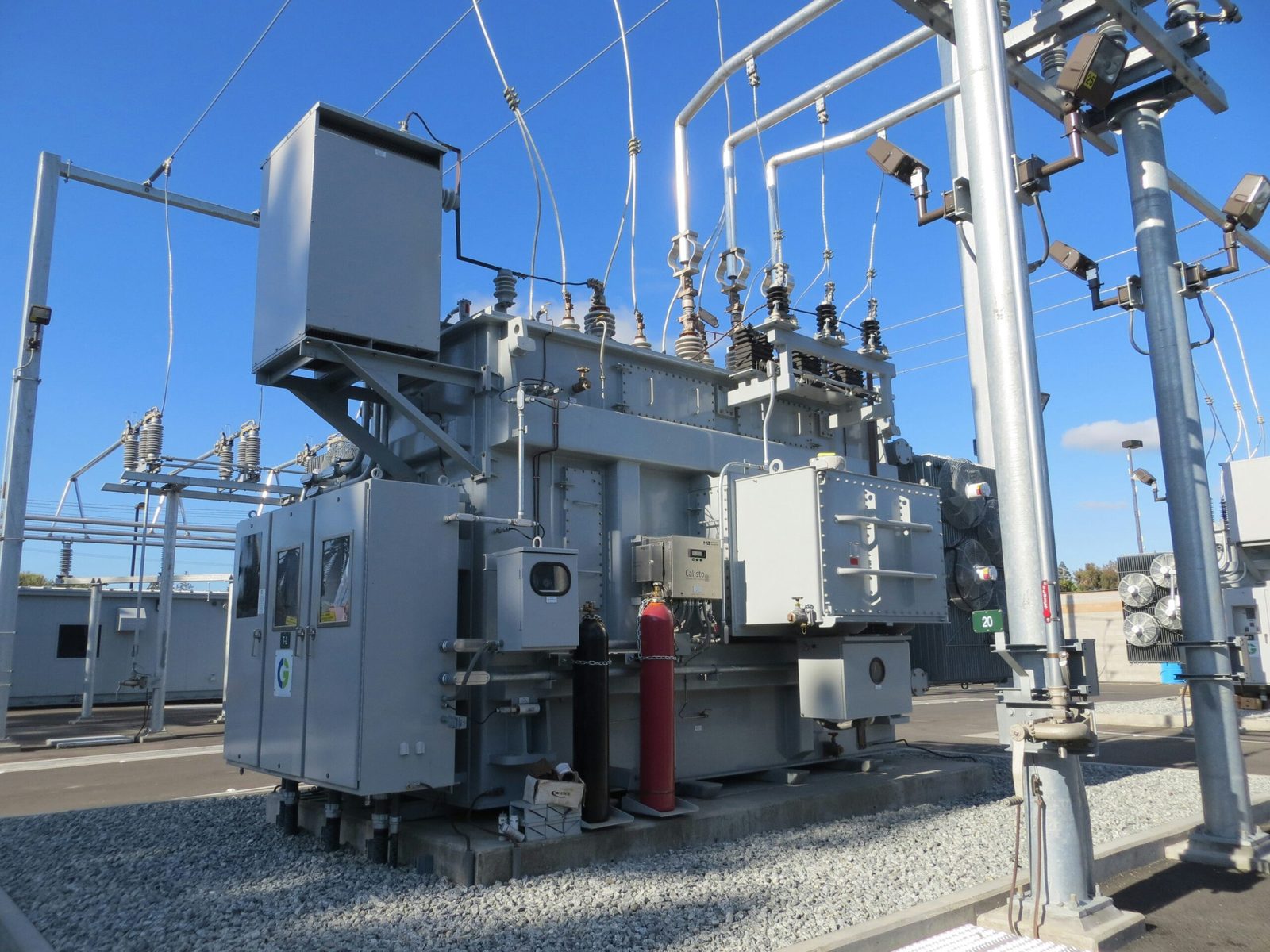
Transformers, breakers, switchgear. The hardware whose lead time is now measured in years. For an operator this layer is spares, lead-time risk, physical security and who is qualified to set the unit.
Lead times. Before the pandemic a utility could order a large power transformer with a lead time of under a year. DOE reported in July 2024 that 36 month lead times were commonly quoted, with maximum quotes reaching 60 months.
Age. NLR estimated in 2024 that roughly 55 percent of the modeled in-service distribution transformer fleet was more than 33 years old. Age alone does not determine condition or remaining life. For large power transformers the average installed age is about 40 years against a design life of about 40 years, with some units still running past 70.
No standard unit. Large power transformers are engineered to each site's electrical, mechanical and transport requirements, which limits interchangeability between utilities, and a single unit can cost as much as $10 million.
Supply. US manufacturers met about 30 percent of domestic large power transformer demand as of 2023, up from 18 percent in 2019. The balance is imported, principally from Japan, South Korea, Germany, Mexico and Brazil. A single US mill is the sole domestic producer of grain oriented electrical steel and supplies only 12 to 20 percent of domestic demand for it.
Capacity is not keeping pace with consumption. Between 2011 and 2023 US consumption of large power transformers rose 28 percent while domestic manufacturing capacity rose 11 percent. Utilization went from 40 percent to 78 percent.
Workforce is a first order constraint. In a 2020 Commerce Department survey of 87 domestic transformer component manufacturers, 89 percent reported difficulty finding qualified or experienced workers and 66 percent called it an ongoing problem, naming welding, coil winding and transformer testing as the gaps. Material supply is a parallel constraint rather than a lesser one: DOE concluded in 2022 that domestic electrical steel production is a major weak link in the chain.
Sources: DOE Large Power Transformer Resilience Report to Congress, July 2024; DOE Large Power Transformers and the U.S. Electric Grid, 2012 with 2014 update; NLR distribution transformer demand analyses, 2024 and 2026; USITC via NLR, 2026; DOE Distribution Transformer Shortage Mitigation, November 2024.
Where grid modernization becomes a work order.
Operational integration of advancing grid technology: how utilities deploy, scale and operate new tools in real conditions. Two of the Grid Advancement Program's ten challenges sit on this layer.
DER interconnection volume, and the IT and operations integration underneath it.
Grid Advancement Program Cohort Chair: Najwa Abouhassan, Exelon.
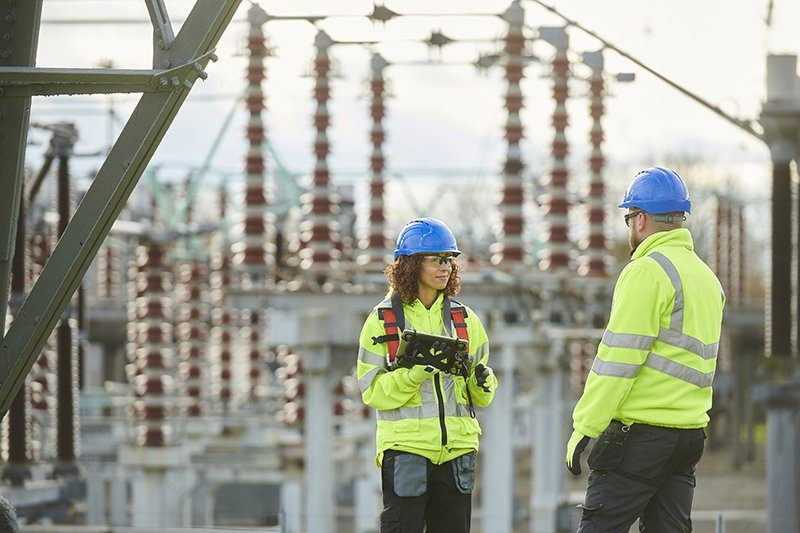
Restoration, mutual assistance, wildfire risk and the trees along every mile of line.
Utilities are naming their actual emergency preparedness and storm response leads to the table.
Wildfire risk tooling is the Grid Advancement Program's first challenge, framed on a real 2025 wildfire mitigation plan.
Safety performance benchmarked peer to peer, with the population and definitions agreed by the members in the room.
Storm Team Chair: Michael Jarro, Florida Power & Light. 118 people from 34 member utilities. Fall meeting September 14 to 15, 2026; a further in-person session is planned for early 2027.

Meters, service, billing, the customer call. And behind all of it, more data than most utilities have yet built the pipelines to act on.
AMI 2.0 decisions: what the next meter generation has to do that the last one did not.
Data-rich, insight-poor. Planning and operations working from different pictures of the same system. Members asked for IT and operations integration and planning-to-operations alignment by name.
Affordability, benchmarked across regimes so members can see their position rather than guess it.
The Data Framework Working Group meets monthly, with member presenters from DTE, APS, NCEMC, Santee Cooper and Austin Energy this year.
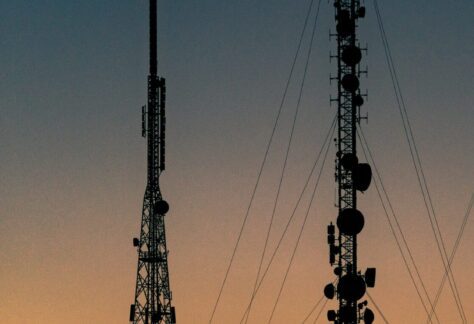
SCADA, field crews, meters, protection. Every layer above rides on a private network someone has to build, secure and keep up.
As devices on the grid multiply, so does the network that has to reach them.
Ownership is the pressure before any technology question. Telecom sits between IT, operations and asset management and often belongs to none of them cleanly, which is how it stays in the background until something depends on it.
A routine network change on the IT side is a protection question on the OT side. Latency, how traffic is routed, and what visibility an operator keeps during the change are not details on this layer.
The last mile, outside the substation fence, is where the growth is and where coverage is thinnest.
The skills are not one skill. Fiber, microwave, backhaul and last mile are different disciplines, and the people who commission a network are not the people who maintain it.
Framing drawn from Grid Mod Pod episode 82 with Francis Frank, on why telecommunications is the backbone of grid modernization.
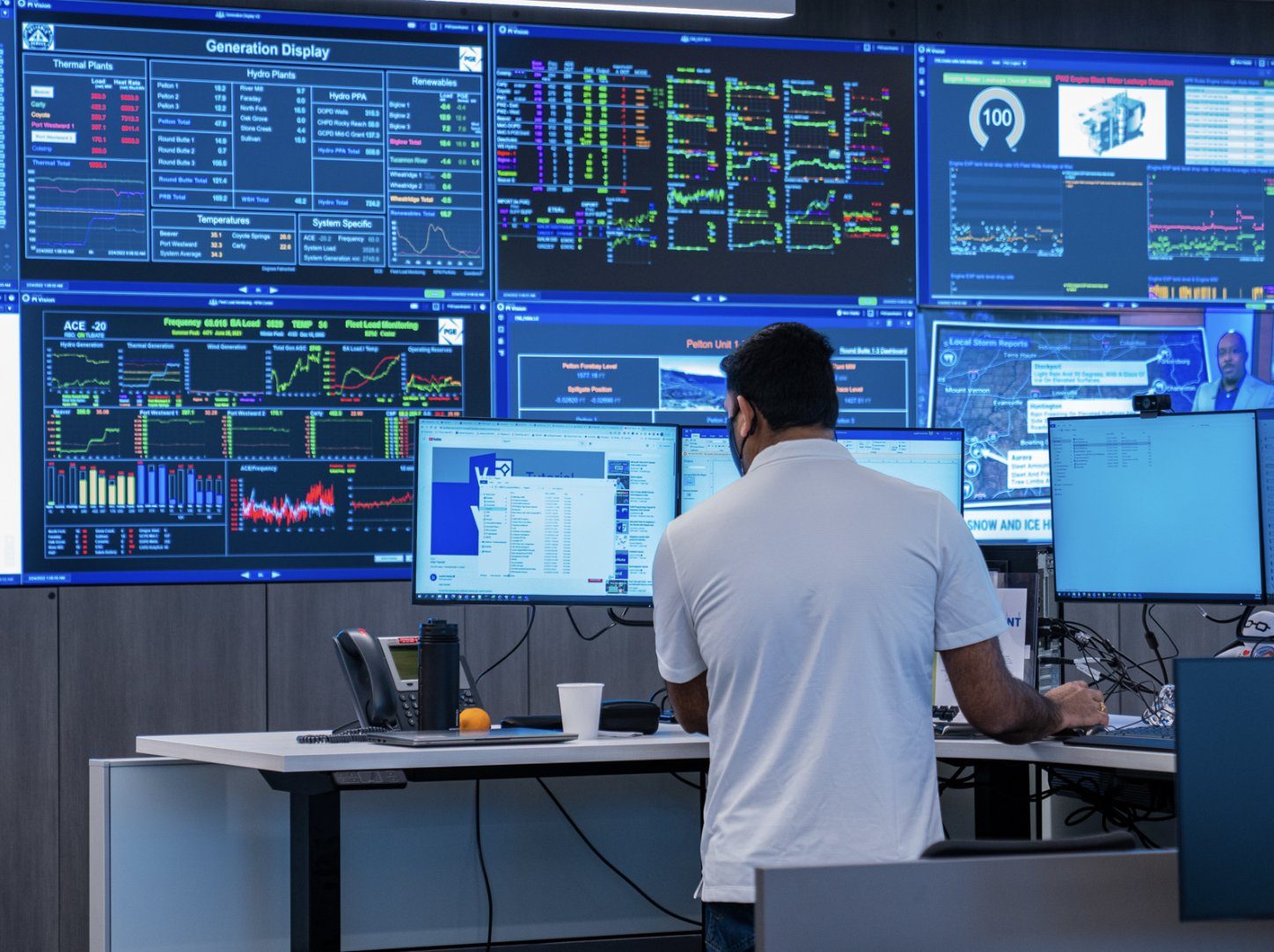
Every dollar above traces back to a number somebody forecast. Get the number wrong in either direction and the system pays for it for a decade.
Load certainty under large-load growth: the Strategy Summit named it theme one. A Load Certainty Framework is in draft for Q3 2026, built from the June member survey.
Methods and tools that hold up when the load shape has no history to fit.
121-person cohort across 39 companies, in three pods. Denver, September 15 to 16, methods and tools. Chicago, November 12 to 13, large load.
Execution capacity is a constraint alongside the unresolved technical and policy questions above. Delivery is people, programs and the discipline to finish.
Program management and execution capability: a Strategy Summit theme with a capability roadmap promised for Q1 2027.
Workforce pipelines for craft, engineering and operations roles.
AI fluency for practitioners, taught by doing on members' real work.
AI for Practitioners runs August 27 through December 2026.
The nine layers are engineering. This one is why they are paid for. Everything above shows up as a rate, a bill, an outage a customer felt, or a promise a utility made about when the lights come back. For an operator this layer is where the work is judged.
Rapid capital spending and bill growth have pushed affordability to board-level attention. There is no single industry-wide metric or threshold; utilities and regulators use energy burden, arrearages, disconnection rates and bill-to-income measures, and they do not agree on which governs.
The capital going into every layer above arrives on the bill of a customer who did not ask for a data center.
A growing share of customers generates or stores electricity, and some export it. Planning, protection, billing and operational systems were not uniformly designed for that.
Customers expect restoration information at a frequency and confidence that damage assessment cannot always support, and the gap between the two is itself an operating problem.
Who pays for load growth, and who should, is being litigated across state commissions right now.
The Affordability Benchmarking Task Force was chartered in August 2026 out of the Executive Committee's summer sessions.
The linkage
AEIC's structure was not designed against this diagram. It grew over 140 years, one problem at a time. Reading it against the layers is the fastest way to see where the work already sits, where two bodies are working the same layer from different ends, and where a layer is thinner than the pressure on it.
No body on this list works that combination. Tell us if yours does.
If your utility is not in a room on a layer that is keeping you up at night, that is the conversation to have. Tell us what you are working on and we will point you at the right room.
"The industry has a delivery problem, not an insight problem."AEIC 2026 Member's Strategy Summit Report, Boulder, March 30 to 31, 2026
Ten layers, ten summit themes, sixteen committees and subcommittees. They cluster into three engines where the work is actually moving this year, and every engine is member-led with AEIC staff behind it.
Load certainty, methods and tools, large load. Workshop Series and the Load Research & Analytics Committee.
Commercial enablement before energization, operating reliability after. Two reference guides, nine member utilities at the table.
IT and operations integration, planning-to-operations alignment, AI use cases shared peer to peer.
Every layer on this page has a committee or working group behind it, and every one of them has a seat for the person at your utility who owns that problem. If that person is not on our list yet, send us the name.
Find your committeeBecome a member